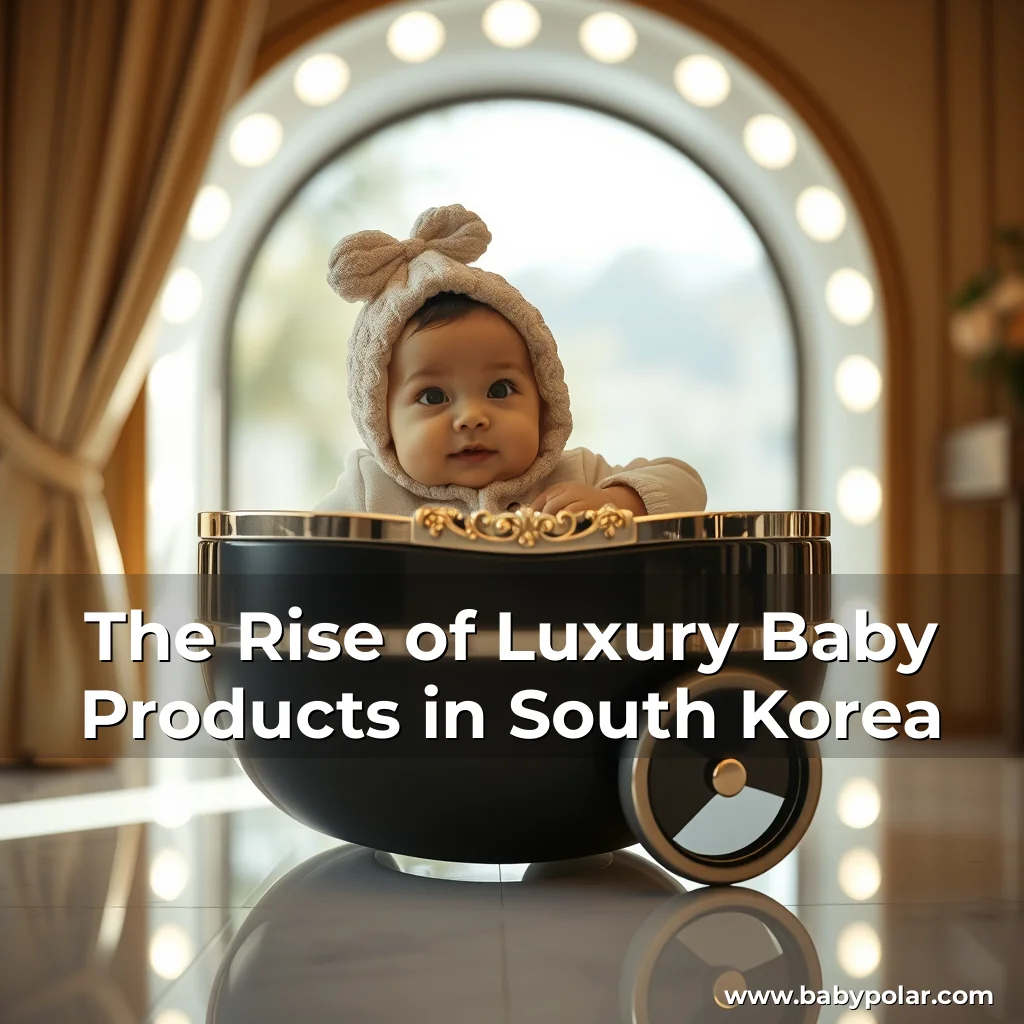
The Rise of Luxury Baby Products in South Korea
South Korea, a country known for its rapidly aging population and historically low birth rates, has witnessed a surprising economic trend: the booming demand for high-end baby products. These luxury items, which were once a necessity, are now sought after for their prestige, design, and exclusivity. Social media played a significant role in igniting curiosity about luxury baby gear after actor Lee Seung-gi was spotted using a baby carrier priced over 1 million won. This sparked a heated discussion online, with many people questioning the value of such high-end products for parenting. Prior to this, the notion of working overtime to afford diapers had been a common experience for many parents. However, in recent years, luxury baby strollers, designer cribs, and imported feeding accessories have become increasingly popular, with some items now fetching well over 1 million won. This trend is not isolated and is not a coincidence. Sales of premium baby goods have risen sharply, both in South Korea and globally. Retailers report significant growth in luxury baby goods sales, with Lotte Department Store seeing a 25% rise in 2024, while Hyundai and Shinsegae reported increases of 26.7% and 15%, respectively. The core of this trend is the concept of the “Ten Pocket Phenomenon,” where a single child receives financial investment not just from parents, but also from grandparents, aunts, uncles, and close friends. This, coupled with the rise of “VIB” or Very Important Baby consumer behavior, has transformed the baby product industry. Historically, Korean baby products ranged from hand-sewn diapers to traditional wooden toys. With Western influence after World War II, plastic bottles and high chairs became common. By the 1990s, economic development brought an influx of imported global brands. Today, the focus is on eco-friendly materials, design-driven functionality, and even AI-powered features. Luxury brands have capitalized on this sentiment, offering high-end products that are both stylish and functional. The Norwegian brand Stokke, often referred to as the “Mercedes-Benz of strollers,” has become a symbol of status in Seoul’s affluent neighborhoods. In recent years, prices have escalated further. Dutch brand Bugaboo offers strollers upwards of 4.8 million won, while the UK’s Egg brand approaches 3 million won. Premium baby carriers now exceed 1 million won, compared to typical options priced under 200,000 won. Designer cribs, high chairs, car seats, and even sterilizers frequently surpass the million-won threshold. Fashion is also no exception, with some baby outfits from designer brands now retailing for over 1 million won per piece, and luxury bedding sets following suit. The rise of luxury parenting is driven by a confluence of factors. South Korea’s economic development has expanded household incomes, while birth rates continue to decline, intensifying the focus on each child. The desire to provide the “best” for one’s only child dovetails with safety concerns, social status, and the influence of celebrities and influencers who showcase high-end baby gear on platforms like Instagram. This environment has propelled the overall baby goods market. In 2024, sales rose 28% compared to the previous year. Although the birthrate temporarily rebounded post-pandemic starting in late 2022, the baby product market has grown steadily, doubling from 2.7 trillion won in 2015 to over 5.1 trillion won in 2022. Analysts expect this momentum to continue into 2026. However, the boom has sparked concerns. A report by Korea’s state-funded Childcare Policy Institute found that from 2013 to 2020, the inflation rate for childcare-related goods and services was nearly double the national consumer inflation average, driven largely by the industry’s premiumization strategies. The global market for luxury baby goods is also growing, with a projected average annual growth rate of 7% through 2030. In the United States, ultra-wealthy parents have been known to spend hundreds of thousands of dollars on bespoke cribs and strollers, some plated in gold or lined with cashmere. Canada, Japan, and China have also seen rising demand, driven by middle-class expansion and a growing preference for imported and high-quality baby products. In China, the baby product market is projected to reach $23.5 billion by 2027, expanding at 10.6% annually. Japan’s consumers, prioritizing safety and traditional materials, are fueling demand for organic and locally made baby items. As one South Korean retail executive noted, “With fewer children in each household, every child becomes the center of attention and investment. Parents are seeking not just utility but excellence in every product. Our marketing strategy now revolves around this new reality—the VIB era is here to stay.”
Market Drivers
- The “Ten Pocket Phenomenon” refers to the single child receiving financial investment from multiple sources, including parents, grandparents, aunts, uncles, and close friends.
- The rise of “VIB” or Very Important Baby consumer behavior has transformed the baby product industry.
- South Korea’s economic development has expanded household incomes, while birth rates continue to decline, intensifying the focus on each child.
- Safety concerns, social status, and the influence of celebrities and influencers are driving the demand for luxury baby gear.
Market Trends
- Luxury baby strollers, designer cribs, and imported feeding accessories are becoming increasingly popular, with prices exceeding 1 million won.
- Premium baby carriers now exceed 1 million won, compared to typical options priced under 200,000 won.
- Designer cribs, high chairs, car seats, and even sterilizers frequently surpass the million-won threshold.
- Fashion is also no exception, with some baby outfits from designer brands now retailing for over 1 million won per piece, and luxury bedding sets following suit.
Global Market
| Country | Projected Growth Rate (%) |
|---|---|
| South Korea | 28% |
| United States | 7% |
| Canada | 7% |
| Japan | 7% |
| China | 10.6% |
“With fewer children in each household, every child becomes the center of attention and investment. Our marketing strategy now revolves around this new reality—the VIB era is here to stay.”
Conclusion
In conclusion, the rise of luxury baby products in South Korea is a complex phenomenon driven by multiple factors, including economic development, demographic changes, and the influence of celebrities and social media. As the market continues to grow, it is essential to consider the potential impact on the industry and the welfare of parents and children alike.

news is a contributor at BabyPolar. We are committed to providing well-researched, accurate, and valuable content to our readers.