
Family Keeps Excluding Woman She Heartbroken After They Welcome Newborn Nephew Without Her
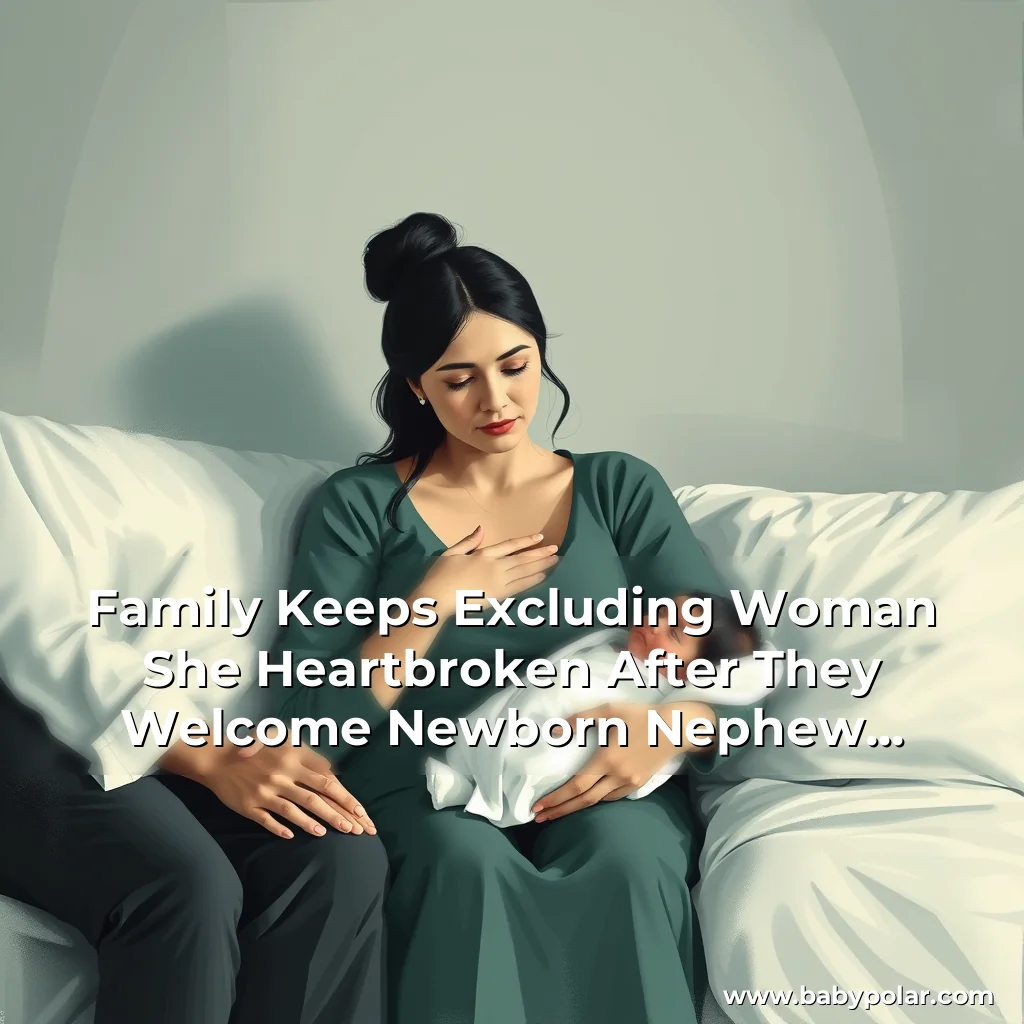
Feeling like you’re not a part of the family can be a painful and isolating experience. It’s not just about the lack of physical presence; it’s about the emotional connection and sense of belonging that comes with being part of a family.
The Impact of Feeling Left Out
Feeling left out can have a profound impact on a person’s emotional well-being. It can lead to feelings of resentment and anger, as well as low self-esteem and a lack of confidence. When we feel like we’re not part of the family, it can be difficult to shake off the feeling that we’re not good enough or that we don’t belong.
The Exclusion of the Author
The author felt a deep sense of exclusion and hurt when she realized that her family was excluding her from these events. She began to wonder why this was happening and what she could do to change it. As she reflected on her relationships with her family members, she realized that she had been feeling increasingly distant from them.
Reasons for Exclusion
She felt like she was being left out and ignored. She felt like she was being treated like an afterthought.
The Afterthought Syndrome
The OP’s experience is not unique. Many people have experienced being treated like an afterthought in their personal and professional lives.
The OP was shocked and felt betrayed by her mom’s assumption.
The Unexpected Call
The OP was taken aback by the sudden video call from her mother. She had been expecting a phone call or a visit, but not a video call. The surprise was compounded by the fact that her mother was introducing her to the baby, which was a significant life event. The OP felt a mix of emotions – shock, surprise, and a hint of betrayal.
The Assumption
The OP’s mother had made an assumption about her work schedule, which led to her not being invited to the hospital. The OP felt that her mother should have known better, given their close relationship. The OP had previously mentioned her work schedule to her mother, and she had always been understanding and supportive. The OP felt that her mother’s assumption was not only hurtful but also unprofessional.
The Aftermath
The OP was left feeling hurt and betrayed by her mother’s actions. She felt that her mother had disrespected her boundaries and her work schedule.
Exclusion in Family: A Silent Killer of Self-Esteem
Exclusion in family can manifest in various ways, often leaving family members feeling isolated, unheard, and unvalued. This phenomenon can have long-lasting effects on a person’s self-esteem, mental health, and overall well-being.
Types of Exclusion
The Impact of Exclusion on Self-Esteem
Exclusion in family can have a profound impact on a person’s self-esteem.
The Complexity of Family Dynamics
Family dynamics can be a complex and multifaceted issue, with each member bringing their own unique experiences, perspectives, and emotions to the table. While family is often seen as a source of comfort, support, and love, it can also be a source of conflict, hurt, and exclusion. The concept of family is not always clear-cut, and individuals may experience different types of family relationships, such as:
- Biological family: parents, siblings, and extended family members
- Adoptive family: individuals who have been adopted or raised by another family
- Blended family: families that have combined members from previous relationships
- Non-traditional family: families that do not fit traditional norms, such as single-parent households or LGBTQ+ families
- Allows for self-reflection and growth
- Prevents emotional exhaustion
- Fosters independence and autonomy
- Enhances communication and conflict resolution
The Impact of Exclusion on Mental Health
Exclusion can have a profound impact on an individual’s mental health, leading to feelings of isolation, low self-esteem, and anxiety.
Preserving mental and emotional well-being through emotional distance.
The Importance of Emotional Distance in Relationships
Emotional distance is a crucial aspect of maintaining healthy relationships, including those with family members. While it may seem counterintuitive to create space between ourselves and our loved ones, establishing emotional distance can be a vital step in preserving our mental and emotional well-being.
Why Emotional Distance is Necessary
In the context of the original thread, the OP was encouraged to establish emotional distance from her family as a means of coping with the stress and anxiety caused by their behavior.