


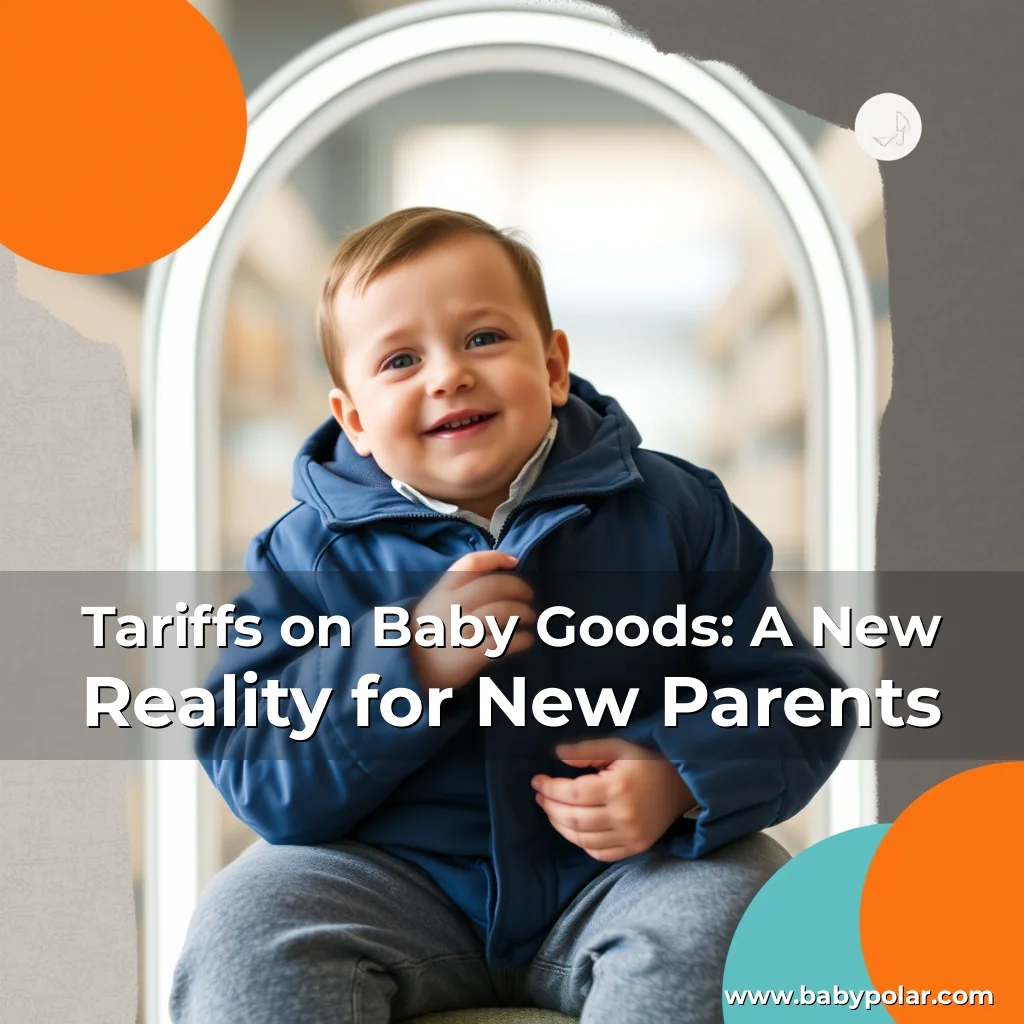
The sudden announcement of President Donald Trump’s tariffs has turned a leisurely stroll into a sprint for new parents Sam Rutledge and his wife. The couple had months to prepare, but after the president’s announcement in early April, they felt compelled to accelerate their gear shopping. Rutledge, a high school physics teacher, explains that they had initially anticipated a few more months to research and purchase the necessary items for their baby. However, the prospect of tariffs made them realize that they needed to act quickly. “We decided to buy them in case they became prohibitively expensive,” Rutledge said. “These are all pretty expensive under normal conditions, but when it became clear tariffs were coming, we decided to buy them in case they became prohibitively expensive.”
The cost of raising a child in America can be staggering. According to Baby Center, a parenting website, the average cost of raising a child in the first year alone is a whopping $20,384. However, with tariffs ranging from 10% to 145% on imports from most countries, the costs are set to skyrocket for new parents. A staggering 90% of the core baby care products and the components that make up baby paraphernalia, including strollers and car seats, are manufactured overseas, primarily in Asia. The majority of these products come from China. The Juvenile Products Manufacturers Association, a U.S. trade group, states that overseas manufacturing has been the norm in their industry for decades. Lisa Trofe, the association’s executive director, notes that the vast majority of products are made in Asia, with China being the primary source. It wasn’t always this way. When Munchkin Inc. CEO Steven Dunn founded his company in 1991, it made baby bottles in California with tooling from New Jersey. However, over the years, the manufacturers Dunn used shut down, and the cost of doing business in the U.S. skyrocketed. Now, about 60% of Munchkin’s 500 products are made in China. In response to the tariffs, Dunn halted orders from China and instituted a hiring freeze at Munchkin’s California headquarters, where 320 people are employed. Dunn expects that Munchkin will run out of some products within three months. “There is no possibility of being able to pass on those tariffs to customers in the form of price increases,” Dunn said. “We need to be competitive in the market, and we can’t afford to absorb the full cost of the import duties.”
Dunn attempted to reduce his company’s dependence on China in recent years, shifting some manufacturing to Vietnam and Mexico. However, finding a domestic manufacturer capable of producing the complex silicone product, the Flow Nipple Shield, proved challenging. The product is now made in Vietnam. “There’s not enough tool makers and manufacturing expertise and automation and skilled labor in the U.S. to make the thousands of products the juvenile industry needs,” Dunn said. Many baby brands and companies contacted by The Associated Press did not respond or declined to comment on the tariffs, including Graco, Chicco, Britax, Nuna, Dorel Juvenile, UppaBaby, Evenflo, and Bugaboo. The Juvenile Products Manufacturers Association requested a tariff exemption, arguing that baby products are essential for children’s well-being. However, Trump exempted some baby products, including car seats and high chairs, from import taxes during his first administration. It is unclear whether he will consider doing so again. The Associated Press left a message seeking comment with the White House, but no response was received. Nurture&, a company that makes a popular nursery glider and other baby furniture, acknowledged the impact of tariffs on their business. In a recent email, the company stated that they started lowering prices on some items when the tariffs hit. However, they may not be able to absorb the full cost of the import duties after April 30. “These are large purchases, these are investments, and this is a very sensitive life stage,” said Jill Gruys, Nurture& Chief Merchant. “We want people to make the best decision for their budget and their family.”
Elizabeth Mahon, owner of Three Littles, a baby store in Washington, expressed concerns that the tariffs will make essential products too expensive for some families. Mahon volunteers twice a month at the Department of Motor Vehicles, where she teaches people how to buckle their kids safely into car seats. Some families may still be hesitant to use car seats if prices increase. “No one is dying if they can’t buy a toy, but if they don’t have access to car seats, kids will get seriously injured,” Mahon said. At her own store, Mahon is receiving notices that some manufacturers plan to introduce steep price increases in May. She feels fortunate to have rented a storage facility and built up her inventory ahead of the tariffs. However, for many small businesses, the extra costs are a death sentence. Molly Ging, owner of The Little Seedling baby shop in Ann Arbor, Michigan, is struggling to manage the upcoming price increases. Ging normally puts in Christmas orders at this time of year, but this year, she is sorting through price increase notices from many of her vendors. “It’s a lot to manage, and I just have no idea how it’s going to play out,” Ging said. Business is brisk right now, with customers hoping to beat tariff-related price increases. However, Ging worries about her 13 employees, all of whom are moms who bring their kids to work, and her ability to maintain enough inventory to meet future demand. “Babies don’t stop being born because there’s tariffs,” Ging said. The impact of tariffs on baby goods is a pressing concern for new parents and small businesses alike. With tariffs set to skyrocket, it is clear that the industry will face significant challenges in the coming months.


news is a contributor at BabyPolar. We are committed to providing well-researched, accurate, and valuable content to our readers.
You May Also Like


New York Federal Courts Weigh In on Baby Food Class Actions
The Ninth Circuit’s Decision in In re Plum Baby Food Litigation In April 2025, the Ninth Circuit issued a significant...
Tariff Tensions Hit Baby Businesses Hard
Tariffs on imported baby products will make it more expensive for parents to buy gear for their newborns Tariffs on...
Baby Products Best Practices 2025
Baby Products Best Practices 2025 Welcome to the evolving world of baby products, where innovation meets parental responsibility. As new...
The Struggle is Real for Small Business Owner Amid Trade Tariffs
Small businesses in the United States are facing significant challenges due to the ongoing trade war between the US and...